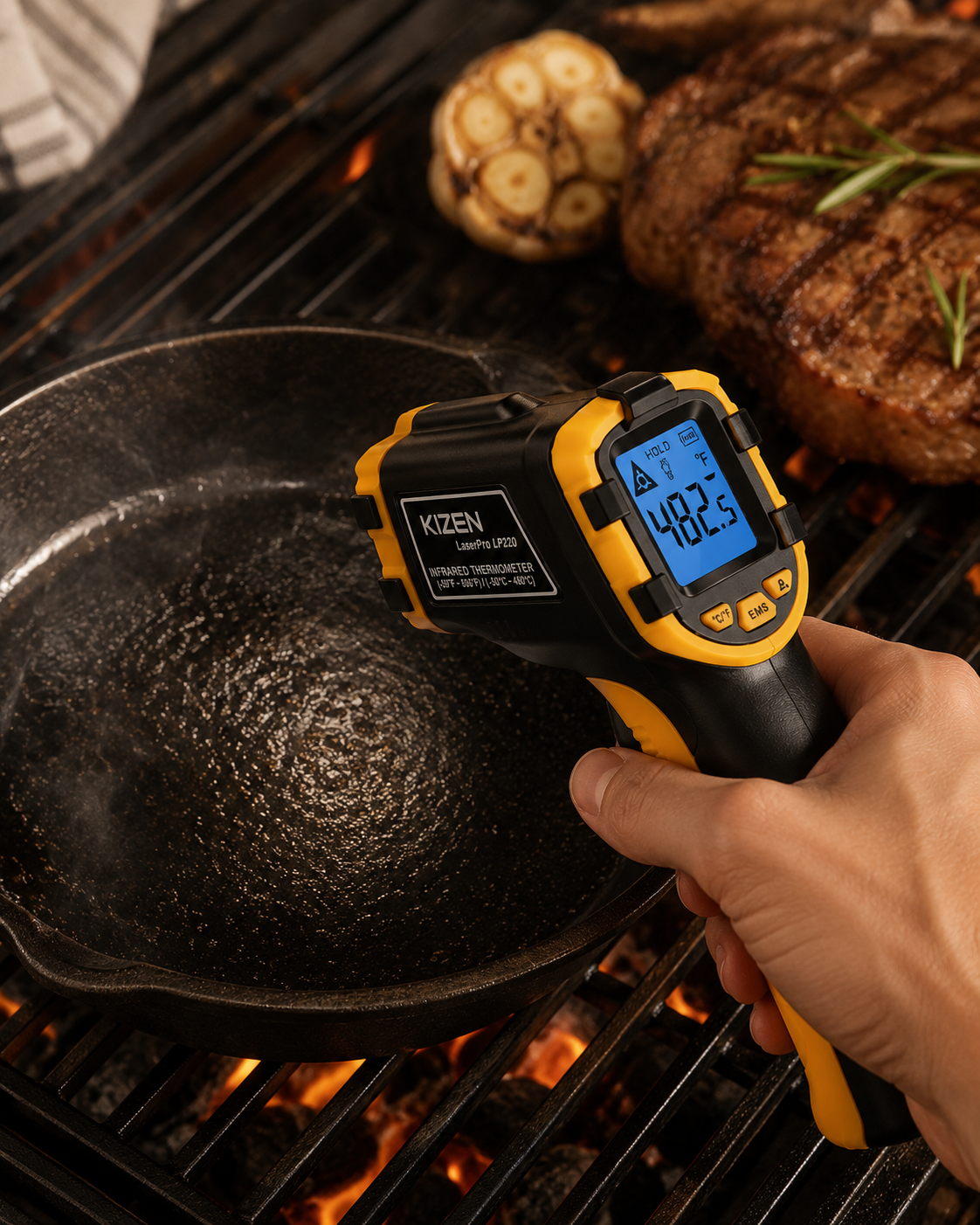
People often put these two tools in the same mental category: both show a temperature, both are used around cooking, both look useful for grilling or kitchen work.
But they answer different questions.
A probe thermometer tells you what is happening inside the food. An infrared thermometer tells you how hot a surface is. That difference sounds small on a product page, but in real cooking it matters a lot.
Think about chicken on the grill. The outside can pick up color quickly, especially over stronger heat. That does not mean the thickest part is ready. Pointing an infrared thermometer at the outside may tell you that the surface is hot, but it will not tell you what is happening in the middle. For that, you need a probe.
Now think about a pan or a pizza stone. You are not trying to check the inside of anything yet. You just want to know whether the surface is hot enough before food goes on. That is where an infrared thermometer makes sense.
So the better choice depends on the job in front of you, not on which tool looks more advanced.
When a Digital Meat Thermometer Makes Sense
A digital meat thermometer is the one to use when food doneness is the question. It has a probe, and the probe has to go into the food. The reading comes from the spot where the probe tip sits.
That is why placement matters. If the tip is in the thickest part of a chicken breast or burger, the reading is useful. If it is too close to the surface, touching bone, sitting against the pan, or angled into the grill grate, the number can mislead you.
This is the part that gets missed in many quick product comparisons. A meat thermometer is not magic. It works well when the probe is placed well.
For chicken, check the thickest section and avoid bone. For burgers, sliding the probe in from the side usually makes more sense than pushing down from the top. For steak, check the thicker area, especially if the cut is uneven. For turkey, roasts, or larger BBQ cuts, one reading is not enough. Food that size can cook unevenly, so checking a second spot is worth the extra few seconds.
That is the kind of work a probe thermometer is made for. It helps when color, timing, and guesswork are not enough.
When an Infrared Thermometer Makes Sense
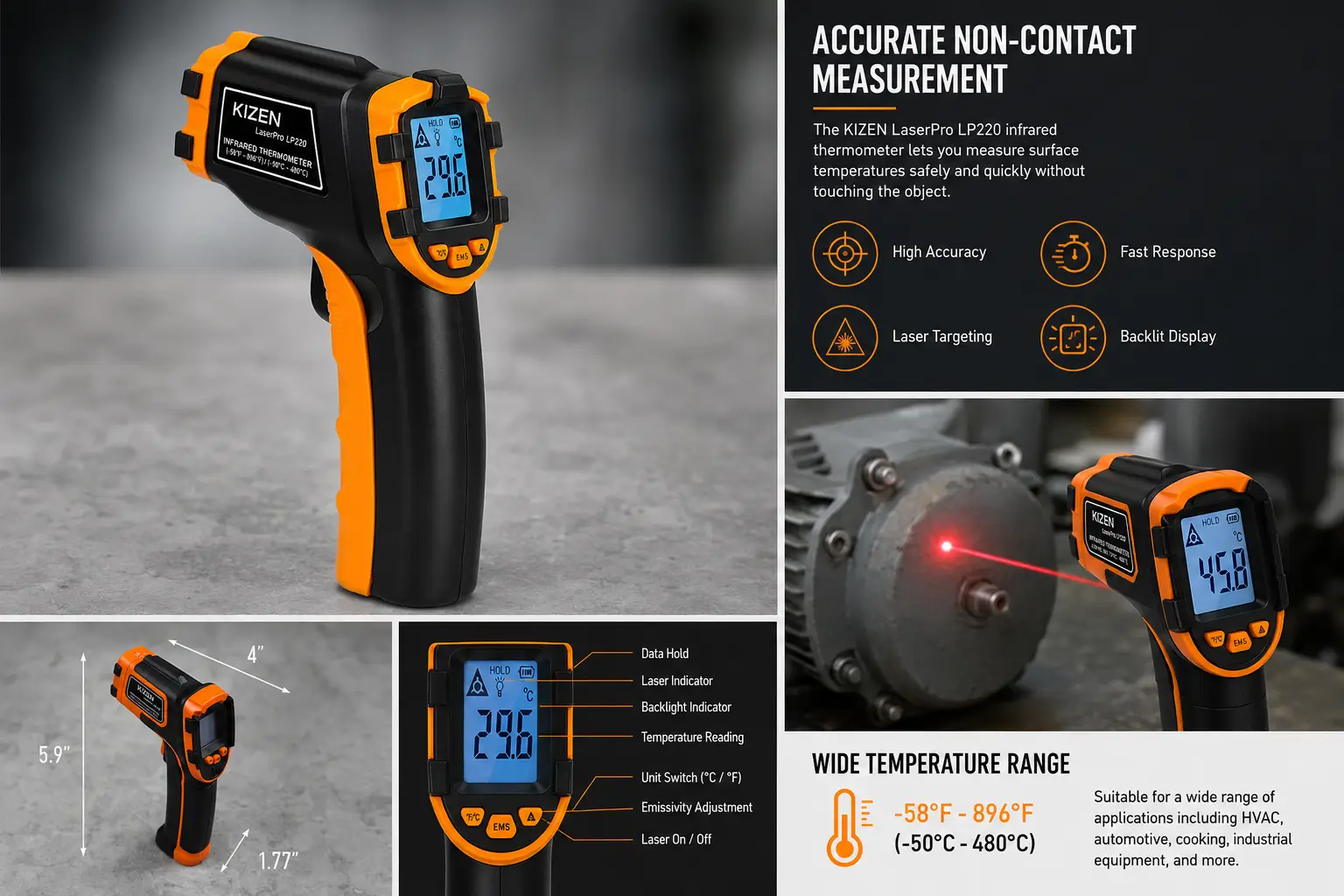
An infrared thermometer belongs in a different part of the cooking process. It does not touch the food or surface. You point it, take the reading, and get surface temperature.
That can be useful before cooking starts. A pan may feel hot, but you may want a better idea before adding food. A griddle can have hotter and cooler areas. A pizza stone may need time to heat. A grill surface can vary from one side to another.
For those situations, a surface reading can help. You are not checking doneness. You are checking the cooking surface.
Check KIZEN Infrared Thermometer on Amazon
Why the Two Tools Are Not Interchangeable
The confusion usually starts when people expect the infrared tool to do both jobs. It feels quick and convenient, so it is easy to assume it can replace a probe. But it cannot read the center of meat. It only sees the surface it is pointed at.
That does not make it a bad tool. It just makes it the wrong tool for internal food checks.
The opposite is also true. A digital meat thermometer can touch food and give an internal reading, but it is not as convenient for scanning a large hot surface. If your main concern is a griddle, pan, pizza stone, or grill area, an infrared thermometer may be easier to use.
When It Makes Sense to Own Both
This is why some kitchens can use both. Not because one is a better version of the other, but because they cover different moments.
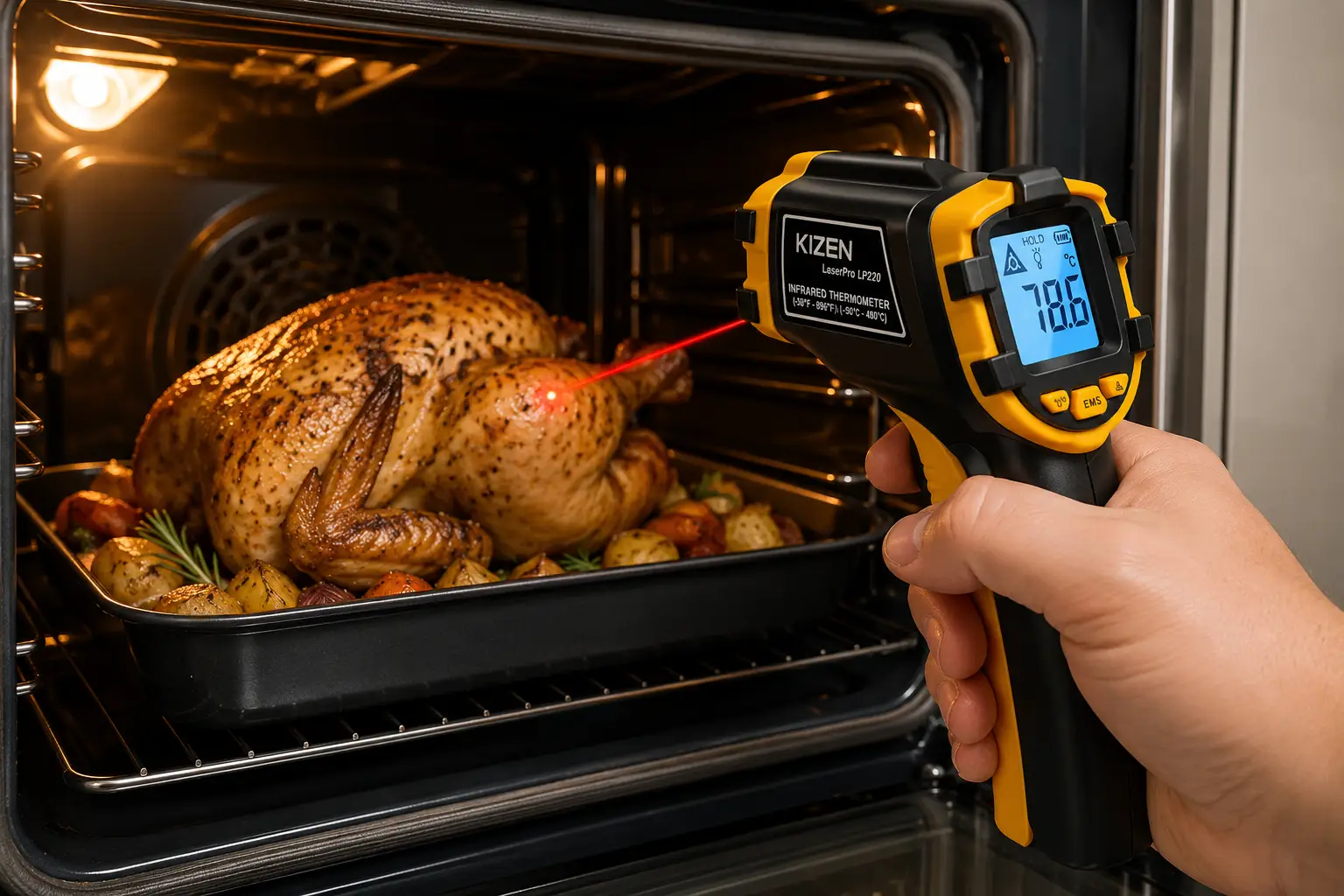
Before the burgers go on the grill, an infrared thermometer may help you understand the surface heat. Once the burgers are cooking, the probe thermometer is the one that can check the center.
Before a steak hits a pan, surface heat may matter. When you are deciding whether the steak is where you want it inside, the probe matters.
Before baking on a pizza stone, an infrared reading may be useful. For chicken, turkey, or a roast, the internal reading is the thing you need.
If You Are Choosing Only One
If you are choosing only one, start with the problem you run into most often.
If you mostly cook meat and worry about whether it is done inside, buy the probe thermometer first. It is the more practical tool for chicken, turkey, burgers, steak, roasts, BBQ cuts, casseroles, and leftovers.
If you already have a way to check food internally and you often care about cooking surfaces, then the infrared thermometer starts to make more sense. It is useful for surface checks, as long as the product instructions support the surfaces and temperature range you need.
Do not choose only by the largest temperature number in the listing. Also check what the tool is meant to measure.
What to Check Before Buying
For a probe thermometer, look at read speed, accuracy claims, probe style, cleaning instructions, and storage. A fold-out probe can be easier to keep in a drawer. A backlit display helps if you grill outside or cook in lower light. Cleaning instructions matter because the probe may touch raw meat.
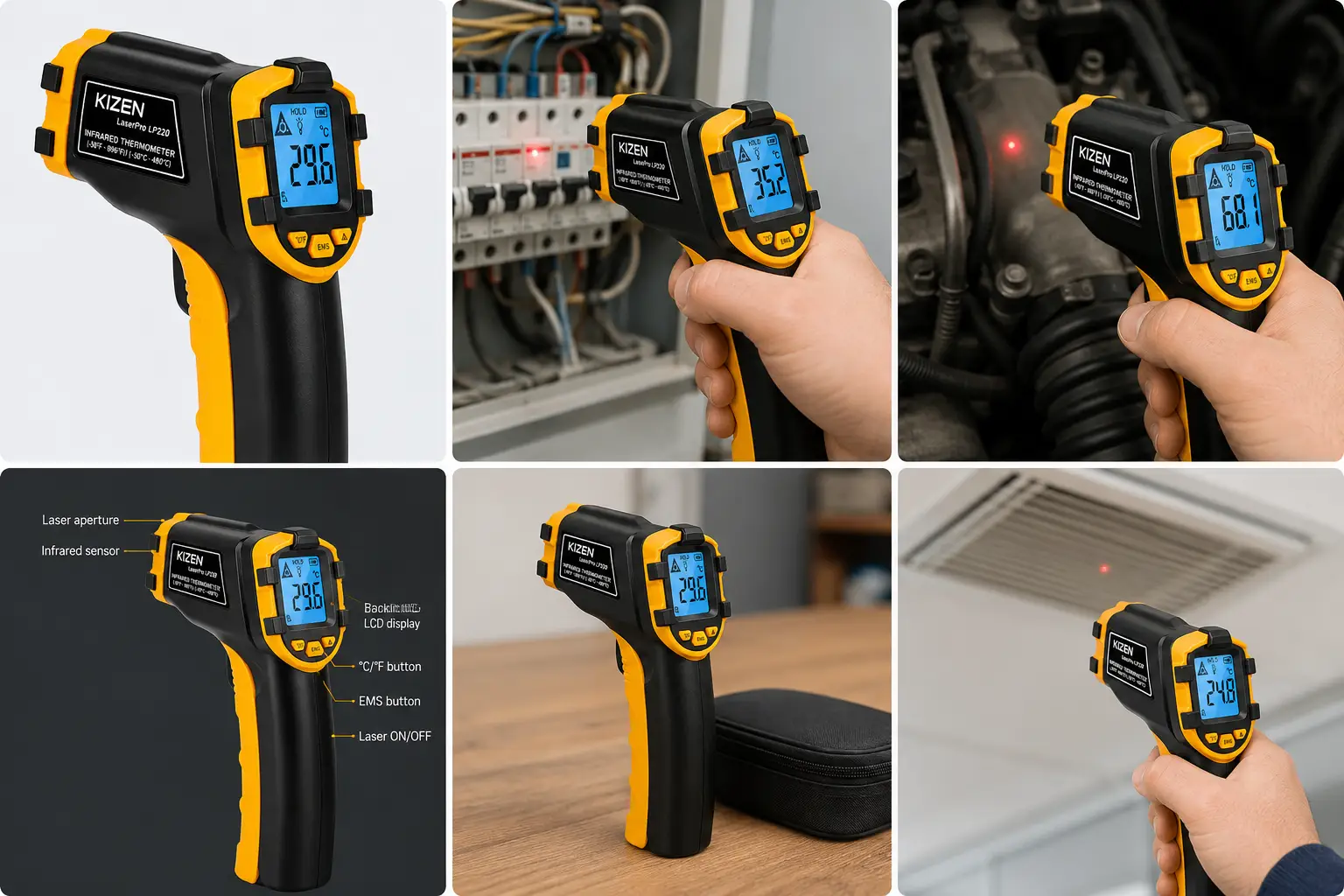
For an infrared thermometer, look at temperature range, supported uses, and distance-to-spot guidance. The reading depends on how the tool is used, so the instructions are not just fine print.
The common mistake is treating the two tools as interchangeable because they both show degrees on a screen. They are not interchangeable.
Digital Meat Thermometer
Use it for checking inside food.
Infrared Thermometer
Use it for checking surfaces.
The Practical Answer
For most home cooks, the probe thermometer is the better first purchase because internal food temperature is harder to judge by sight. Chicken can look ready before it is. Burgers can brown outside while the center still needs attention. A turkey can be uneven from one section to another.
An infrared thermometer is useful, but it solves a different problem. It helps when surface heat affects the cooking setup.
So the practical answer is simple: use a probe when the inside of the food matters. Use infrared when the surface is what you need to know.
Once you separate those two questions, the choice becomes much easier.
Check the Current Product Details
Open the Amazon listing to confirm the current specifications, intended use, temperature range, package details, and availability before buying.
Related Reading
- How to Choose a Digital Meat Thermometer
- KIZEN Digital Meat Thermometer Review
- KIZEN Infrared Thermometer Gun Review
- How to Use a Digital Meat Thermometer
Affiliate Disclosure: As an Amazon Associate I earn from qualifying purchases.