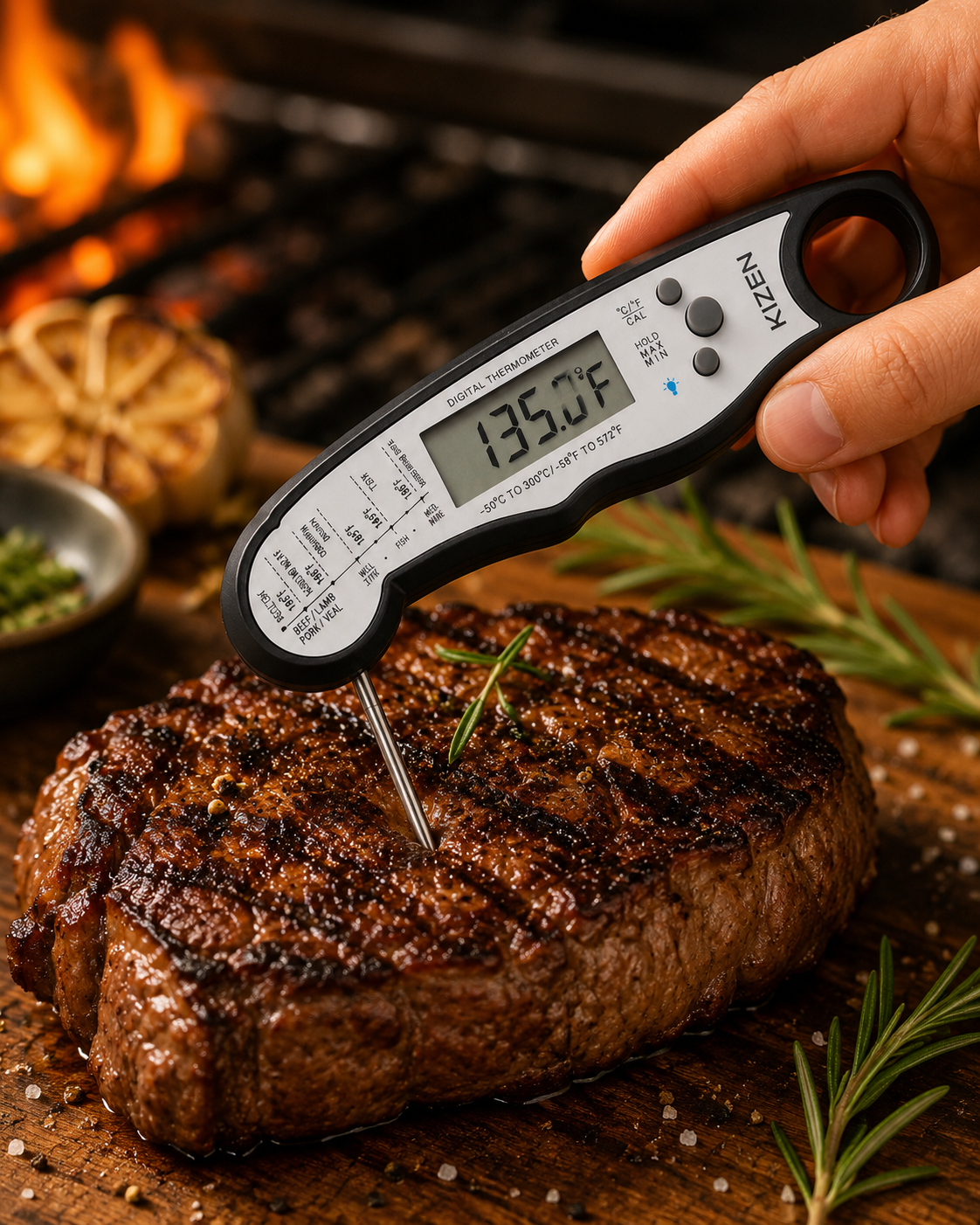
A digital meat thermometer is a small tool, but it can change how you cook meat, chicken, burgers, turkey, and BBQ. Not because it makes cooking complicated. It does the opposite. It gives you a number instead of making you guess by color, time, or touch.
The hard part is choosing the right one. Product listings can look similar at first: fast reading, digital display, probe, kitchen use, grilling use. But the details matter once you are actually cooking.
A thermometer that works well for quick checks at the grill may not be the same style you would want for long oven cooking. A model with a bright display may be easier to use outside. A waterproof claim does not always mean dishwasher safe. And an infrared thermometer, even though it measures temperature, is not the same thing as a probe-style meat thermometer.
This guide explains what to look at before buying, especially if you are choosing a digital meat thermometer for home cooking, grilling, BBQ, or everyday kitchen temperature checks.
Start With How You Actually Cook
Before comparing features, think about what you cook most often.
If you mostly cook chicken breasts, burgers, steaks, pork chops, or quick weeknight meals, an instant-read probe thermometer is usually the most practical choice. You use it for quick checks, then remove it from the food.
If you cook larger cuts, roasts, turkey, or longer BBQ sessions, you may need to pay more attention to probe length, read speed, and whether the thermometer style fits that kind of cooking.
If you mainly want to check pan heat, griddle temperature, or a pizza stone, a digital meat thermometer may not be the right tool at all. That is usually where an infrared thermometer comes in. A meat thermometer checks inside food with a probe. An infrared thermometer checks surface temperature.
That difference matters. If the question is "Is this chicken cooked inside?" you need a probe.
Probe Style Matters More Than It Looks
The probe is the part that actually does the work.
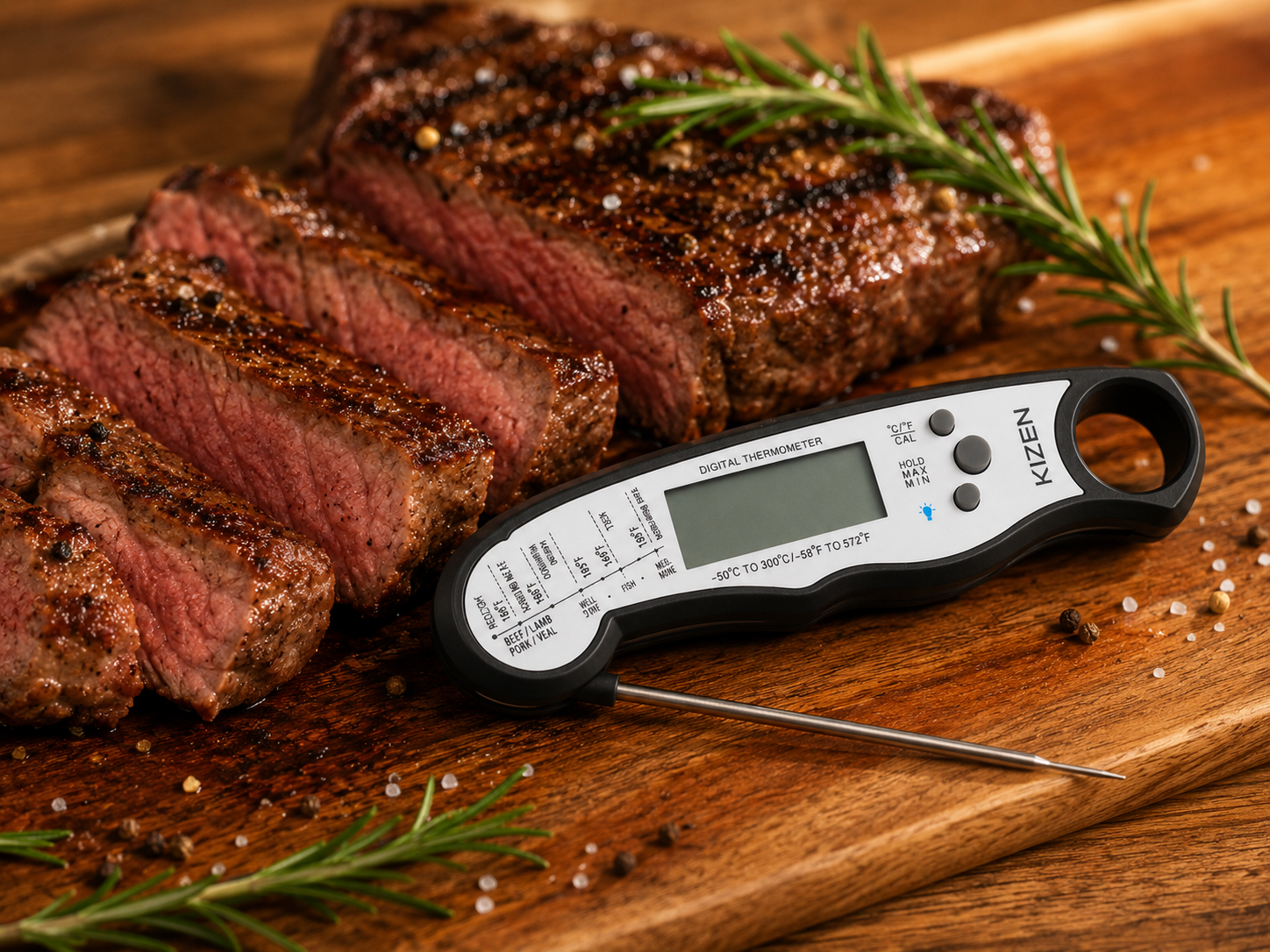
A fold-out probe is common on instant-read meat thermometers. It opens when you need it and folds back into the body for storage. This style is convenient for home kitchens, grilling, and quick food checks.
A fixed probe can also work, but it may be less compact depending on the design.
For quick spot checks, either style may be fine if the probe is easy to insert and the display is easy to read. For larger cuts or deeper checks, probe length becomes more important. You want the tip to reach the thickest part of the food without forcing your hand too close to heat.
Also think about how the probe stores. A thermometer that folds closed is easier to keep in a drawer, on a magnetic surface, or near the grill area without the probe sticking out.
Read Speed: Useful, But Not Magic
Many shoppers look for a fast-reading thermometer first. That makes sense.
When the oven door is open or the grill lid is up, you do not want to wait too long. A faster reading can make the tool easier to use, especially when checking several pieces of food.
Still, read speed is not the only thing that matters. The number needs to settle enough to trust. If the display is still moving, give it another moment.
A very fast reading is helpful, but poor probe placement can still give you a bad result. Put the probe too close to the surface, against bone, or near the grill grate, and the speed will not save the reading.
Look for a clear reading-speed claim in the product listing, but also check accuracy, probe style, and real-use details.
Accuracy Claims: Read the Wording Carefully
A thermometer is only useful if the reading is close enough for the cooking task.
Some listings give an accuracy claim, such as a stated range in degrees. That is worth checking before buying. If accuracy matters to you, do not rely only on words like "precise" or "high accuracy." Look for a specific claim in the product details.
Also remember that accuracy and placement work together. Even a good thermometer can give a misleading reading if the probe is touching bone, metal, or the bottom of a pan.
For meat, the goal is to measure the internal temperature in the right spot, usually the thickest part.
Display Visibility Can Make or Break Everyday Use
A display that looks fine in a product photo may be annoying in a real kitchen.
If you cook outside, grill in the evening, or work in low light, a backlit display can be helpful. If the numbers are small or hard to read at an angle, you may find yourself moving the thermometer around while holding hot food or standing over a grill.
Look at the display details before buying:
- Is the screen large enough to read quickly?
- Is there a backlight?
- Is the display easy to see in low light?
- Does the listing mention rotation or screen orientation?
- Are the buttons clear enough for how you cook?
You do not need every extra feature. You need a screen you can read without fighting it.
Temperature Range: Match It to Your Cooking
Temperature range sounds technical, but the buying question is simple: does the thermometer cover the foods and cooking tasks you plan to use it for?
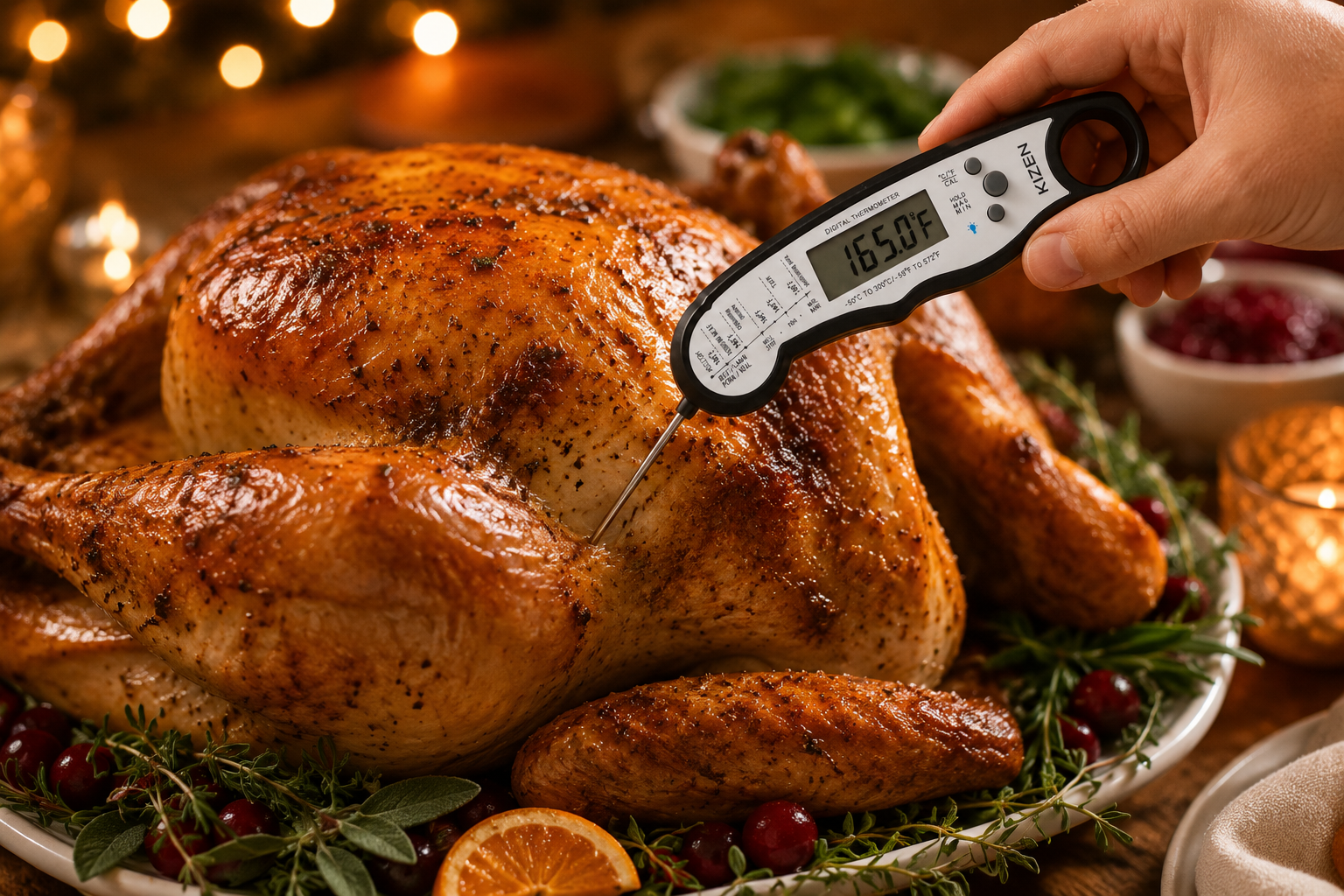
For meat, poultry, burgers, roasts, and BBQ, check that the listed range fits normal cooking temperatures. If you also want to use the thermometer for liquids, candy making, bread, or frying oil, do not assume it supports those uses. Check the current product listing and instructions.
This is one of the most common mistakes. A shopper sees "food thermometer" and assumes it works for every food-related temperature task. That is not always true.
If frying oil, candy, liquids, or baking are important to you, confirm those uses before ordering.
Waterproof Does Not Always Mean Dishwasher Safe
Cleaning is easy to overlook until the first time the probe touches raw chicken.
A thermometer used with meat needs clear care instructions. Some models can be rinsed. Some are water-resistant or waterproof to a listed rating. Some should not be soaked. Many are not dishwasher safe.
Do not guess from the word "waterproof." Read the care section.
For a digital meat thermometer, look for:
- whether the probe can be washed under running water
- whether the body can be rinsed
- whether soaking is allowed
- whether the product is dishwasher safe
- whether the listing gives specific care instructions
This matters because electronics and water do not always mix, even when the thermometer is made for kitchen use.
Storage Is Not a Small Detail
A thermometer is more useful when you can actually find it.
If it gets buried in a drawer, you may stop using it. That is why storage features matter more than they seem.
A fold-out probe helps keep the tool compact. A magnetic back can make it easier to store near a fridge, grill area, or other metal surface if the magnet works with your setup. Some people prefer a hanging hole or a case.
Before buying, think about where the thermometer will live. Near the stove? In a drawer? With grill tools? In a BBQ kit?
The best storage feature is the one that keeps the thermometer close enough to use.
Battery Type and Included Parts
Battery details are not exciting, but they are practical.
Check what type of battery the thermometer uses and whether one is included. Some listings include a battery and instruction guide. Others may require you to buy batteries separately.
Also look at how easy the battery compartment seems to access. If the thermometer uses a less common battery size, that may matter later.
This is not the main reason to choose a thermometer, but it is worth checking before checkout.
Digital Meat Thermometer vs Infrared Thermometer
This is an important distinction.
A digital meat thermometer uses a probe to check internal food temperature. That is what you want for chicken, turkey, burgers, roasts, steak, BBQ cuts, and other foods where the center temperature matters.
An infrared thermometer checks surface temperature. It may be useful for pans, griddles, pizza stones, grill surfaces, and similar tasks, depending on the product instructions.
It should not replace a probe thermometer for meat doneness.
If you point an infrared thermometer at chicken, it reads the surface. It does not tell you what is happening in the thickest part inside.
So if you are buying your first thermometer mainly for cooking meat, start with a probe-style digital meat thermometer.
Common Buying Mistakes
- Buying based only on the fastest reading claim.
- Ignoring cleaning instructions.
- Buying an infrared thermometer when you actually need internal food readings.
- Assuming every food thermometer works for liquids, frying oil, or candy making.
- Forgetting about storage and where the thermometer will live.
Questions to Ask Before Buying
- What foods will I check most often?
- Will I use it indoors, outside, or both?
- Do I need a backlit display?
- Is a fold-out probe easier for my storage setup?
- Does the listing give a clear read speed?
- Does it give an accuracy claim?
- Can it be rinsed or washed under running water?
- Is it dishwasher safe, or does the listing say not to put it in the dishwasher?
- What batteries does it use?
- Does the product information support liquids, candy, frying oil, or baking if I need those uses?
Those questions are more useful than choosing only by price, color, or a bold claim in the product title.
Who Should Choose a Simple Instant-Read Thermometer?
A simple instant-read digital meat thermometer is usually enough for many home cooks.
It makes sense if you mostly need quick checks for chicken, steak, burgers, turkey, pork, BBQ, or leftovers. It is also a good fit if you want something easy to keep near the stove or grill.
You do not need a complicated tool for everyday cooking. You need one that reads clearly, is easy to clean, and fits the way you cook.
When to Look for Something More Specific
A basic instant-read thermometer may not be the best answer for every kitchen.
If you do long smoking sessions, cook large cuts often, or need continuous monitoring, you may want a different thermometer style. If you need surface temperature checks, look at infrared tools instead. If you need candy or frying oil temperature checks, confirm that the product supports those uses.
The point is not to buy the most feature-heavy thermometer. The point is to buy the right type.
Check the Current Product Details
Open the Amazon listing to confirm current price, specifications, package contents, battery details, cleaning instructions, and supported uses before buying.
Related Guides
- KIZEN Digital Meat Thermometer Review
- Digital Meat Thermometer vs Infrared Thermometer
- How to Use a Digital Meat Thermometer
Affiliate Disclosure: As an Amazon Associate I earn from qualifying purchases.
Final Takeaway
Choosing a digital meat thermometer is mostly about matching the tool to your cooking habits.
For most home cooks and grill users, a simple instant-read probe thermometer is the right starting point. Look at probe style, read speed, accuracy claims, display visibility, cleaning instructions, storage, battery type, and supported uses.
Do not choose only by the biggest claim in the listing.
Choose the thermometer that answers the question you actually have while cooking: what is happening inside the food?